What Is Dual eSIM: A Guide to Using Two Virtual SIM Cards Abroad in 2026
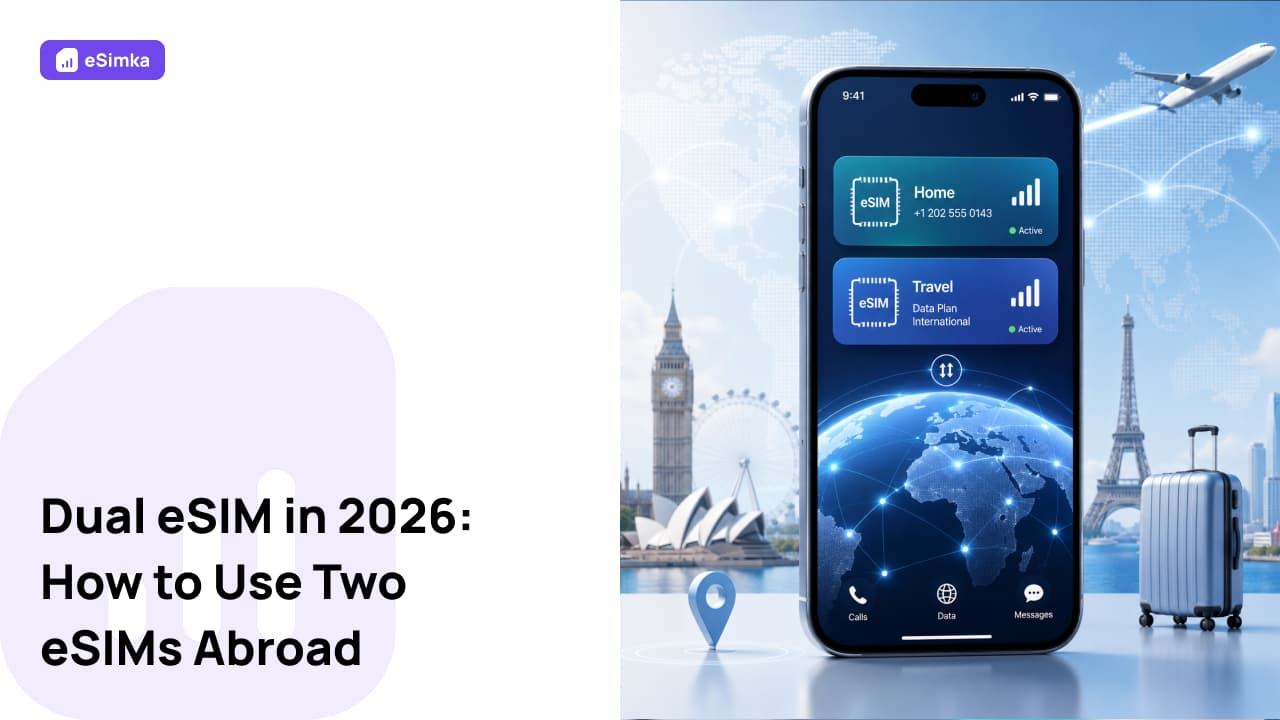
Modern smartphones have eliminated the need to search for a SIM ejector tool and constantly swap physical cards. Dual eSIM technology allows you to run two digital plans at the same time: stay connected on your home number while simultaneously using mobile internet through a local plan.
Dual eSIM Technology: How It Works and Its Key Features
Instead of a traditional SIM card slot, a miniature eUICC chip is soldered directly onto the device’s motherboard. Understanding how this chip works and what Dual eSIM is makes it much easier to choose the right device for international travel.
The Difference Between Classic Dual SIM, SIM Plus eSIM, and Pure Dual eSIM
In the traditional setup, two SIM cards have to be inserted into the tray. In a hybrid setup, a standard nano-SIM works alongside one virtual profile. Dual eSIM allows the device to operate with two independent digital profiles at the same time while leaving the physical SIM slot completely empty. In practice, the main difference between Dual SIM and eSIM is the absence of mechanical stress on the tray and wear on the contacts.
How Standby Mode Works With Two Active Digital Profiles
Simultaneous operation of two numbers is provided by the familiar Dual SIM Dual Standby (DSDS) architecture. The device’s built-in radio module continuously maintains contact with the base stations of both operators, keeping both lines registered on the network. During an incoming call on one line, the second line may temporarily become unavailable, but both networks become active again as soon as the call ends.
How Many Virtual Numbers Can Be Stored in the Device Memory
The eUICC memory can store between five and twenty profiles — the exact limit depends on the chipset model and firmware. You can download a dozen plans in advance, although only two selected numbers will remain active on the network at the same time.
Benefits of Dual eSIM for Travel and International Trips
Abroad, two active digital plans provide greater flexibility and help avoid unnecessary expenses. When evaluating Dual eSIM capabilities, travelers often choose this setup for stable connectivity and quick internet access without visiting mobile operator stores.
Keeping Your Primary Number for Banking SMS While Using Local Mobile Internet
Bank confirmations, verification codes, and calls from relatives continue to arrive on your home number without delays. All mobile data is routed through the second line, helping you avoid expensive roaming internet charges.
Saving on Mobile Data Roaming Without Buying Physical SIM Cards
It is reasonable to ask why Dual eSIM can be more economical than roaming from your home operator. Local packages are sold at domestic rates without daily charges simply for connecting to a foreign base station.
Quickly Switching Plans When Crossing Borders Between Multiple Countries
When traveling through several countries, switching to the required package in the network settings takes less than a minute. There is no longer any need to queue at a SIM card counter after landing or spend time registering a contract with your passport.
Which Smartphones Support Dual eSIM in 2026
Brands are increasingly abandoning physical SIM slots and replacing them with built-in connectivity chips. Before purchasing a plan, always check your phone’s technical specifications.
Apple iPhone Models Supporting Two Simultaneously Active eSIMs
Apple introduced support for two digital SIM cards starting with the iPhone 13 series. All iPhone 15, 16, and iPhone 17 versions, including Pro and Max models, reliably support two active digital lines. Devices produced for the US market are shipped without a physical SIM tray.
Flagship Android Devices: Samsung Galaxy and Google Pixel Lineups
Samsung Galaxy flagships offer the same capability — from the S24 and S25 series to foldable Fold models, both profiles can work simultaneously without issues. Google Pixel smartphones perform just as well: switching between networks is smooth and does not require restarting the device.
How to Quickly Check Device Compatibility Before a Trip
Open the phone dialer and enter the service code *#06#. If two IMEI numbers and an EID code appear, the phone is ready to keep two digital lines active on the network at the same time.
Step-by-Step Guide: How to Set Up Dual eSIM for International Travel
Preparing your mobile connection before a trip takes only a couple of minutes and does not require any complicated actions.
Installing and Activating a Plan via QR Code or the eSimka App
On the eSimka website or in the app, select the required country and purchase a suitable travel plan. Scan the received QR code with your smartphone camera, confirm the plan installation, and give the number a clear name, such as “Travel.”
Assigning Roles to Numbers: Voice Calls, SMS, and Mobile Internet
In the cellular settings menu, all that remains is to assign tasks to each line:
- Set your home number as the primary line for regular calls and SMS messages.
- Select the eSimka profile as the mobile data source.
Configuring Data Roaming to Prevent Hidden Charges
In your home SIM settings, make sure to disable data roaming to avoid unnecessary charges from background traffic. For the travel profile, on the other hand, enable roaming: abroad, the package internet connection is delivered through local partner networks.
Solving Common Technical Problems When Using Two eSIMs
If mobile internet does not start automatically after landing, check the main network settings.
What to Do if Mobile Internet Does Not Connect Abroad
Restart the phone or switch it to airplane mode for about twenty seconds. Open the mobile data settings and check the APN access point: in most cases it is configured automatically, but sometimes it must be entered manually.
Configuring Automatic Cellular Data Switching Between Profiles
In the cellular settings, make sure to disable the “Allow Cellular Data Switching” option. Otherwise, if the signal becomes weak, the device may switch to your home number, resulting in expensive roaming data charges.
Frequently Asked Questions (FAQ)
Can You Use Two eSIMs Simultaneously Without Any Physical SIM Card?
Yes, the device can maintain connectivity on two digital profiles without a physical SIM card — even if the phone does not have a SIM tray or any physical slot at all.
Does Using Two eSIM Profiles Simultaneously Affect Battery Life?
Under normal conditions, two active numbers drain the battery at approximately the same rate as two traditional physical SIM cards. Battery consumption increases mainly in areas with unstable reception, where the modem has to constantly search for network towers.
Can a Deleted eSIM Profile Be Reactivated While Traveling?
The vast majority of travel plans are designed for a single installation. If you delete the plan from the device, the previous QR code will no longer work, and you will need to purchase the package again.
What Is More Convenient for International Travel: Two eSIMs or a Nano-SIM Plus eSIM Setup?
Using two digital numbers is generally more convenient: there is no risk of dropping or losing a physical SIM card during a connection or layover. Setting up and paying for the required package takes only a couple of minutes at home before departure.
Will Incoming Calls and SMS Still Arrive on the Home Number While Mobile Internet Uses the Second eSIM?
Yes, incoming calls and service SMS messages will continue to arrive normally on your primary number. The main thing is to disable mobile data on the primary line in advance and route all internet traffic exclusively through the travel package.