eSIM for Egypt: Internet for Your Trip Without Roaming
Learn how to choose an eSIM for Egypt, how much data you need, when to install the profile, and what to check after arrival.
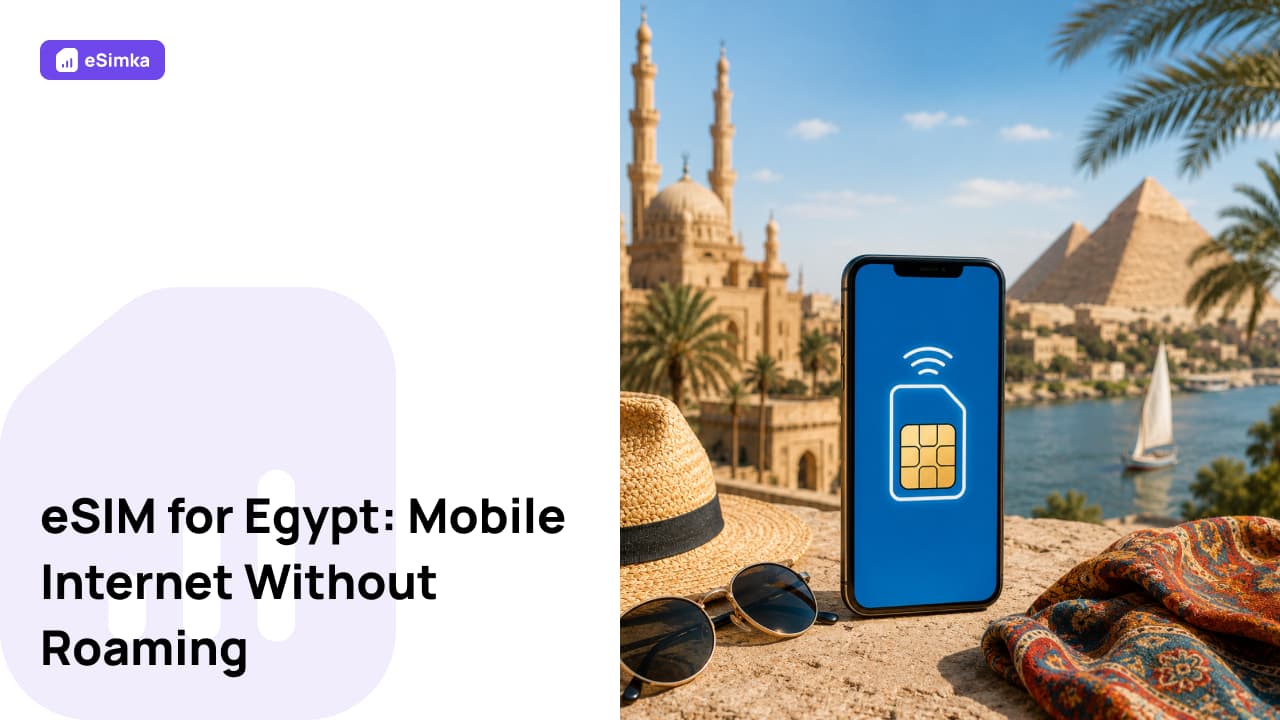
Egypt is a popular destination for beach vacations, sightseeing, and independent travel. You may need mobile internet immediately after arrival to contact your hotel, arrange a transfer, open maps, check a reservation, use a translation app, or message friends and family.
To avoid searching for a local SIM card at the airport and paying expensive international roaming fees, you can set up an eSIM for Egypt in advance. After purchasing a plan, you receive a QR code or manual installation details, add the profile to your smartphone, and select the eSIM for mobile data.
Why Do You Need an eSIM in Egypt?
Internet access in Egypt is useful for more than messaging and social media. You may need it to check directions, order a taxi, contact a tour guide, find a restaurant, confirm an excursion, or receive a message from your hotel.
An eSIM allows you to prepare your mobile connection before the trip begins.
The main benefits include:
- installation before departure;
- internet access after arrival;
- no need to replace your physical SIM card;
- keeping your primary number active for calls and text messages;
- choosing a package that matches the length of your trip;
- predictable expenses without costly roaming charges.
It is a convenient option for tourists, independent travelers, and anyone planning to work during their stay.
Where Does eSIM Work?
Travel eSIMs connect to partner mobile networks in Egypt. Coverage and available speeds depend on the provider, selected plan, and location.
Mobile internet is generally available in popular destinations, including:
- Cairo;
- Alexandria;
- Hurghada;
- Sharm El Sheikh;
- Marsa Alam;
- El Gouna;
- Luxor;
- Aswan;
- Dahab;
- major airports and resort areas.
Connections are usually more reliable in cities, hotels, and popular tourist areas. Signal strength may be lower when traveling through the desert, between towns, or visiting remote beaches.
Before purchasing a plan, check which mobile networks the eSIM uses and whether coverage is available at your destination.
Which Data Package Should You Choose?
The amount of data you need depends on the length of your trip and how you usually use your smartphone.
General recommendations:
- 1–3 GB — maps, messaging apps, email, and checking reservations;
- 5–10 GB — daily navigation, social media, music, and video calls;
- 10–20 GB — remote work, uploading photos, and video streaming;
- large or unlimited package — long-term stays and regular online work.
For a standard 7–10 day vacation, 5–10 GB is usually enough for most travelers. If you plan to stream videos, join video conferences, or share your connection with other devices, choose a larger package.
Before purchasing, also check:
- the plan’s validity period;
- maximum connection speed;
- 4G or 5G support;
- hotspot and tethering availability;
- speed restrictions after using a certain amount of data;
- whether the package can be topped up.
When Should You Install and Activate an eSIM?
It is best to install your eSIM before departure while your smartphone is connected to stable Wi-Fi. This gives you time to confirm that the profile appears in your settings and has been added correctly.
Installation and activation may happen at different times. With some providers, the validity period begins after the first connection to a network in Egypt. With others, it starts immediately after the profile is installed.
Always read the plan conditions before installation.
Before your trip:
- Check whether your smartphone supports eSIM.
- Save the QR code and installation instructions.
- Add the profile to your device settings.
- Rename it, for example, “Egypt.”
- Do not delete the eSIM after installation.
- Check whether data roaming must be enabled.
- Save the provider’s customer support details.
After arrival, select the eSIM for mobile data and wait for the device to connect to a local network.
How to Install an eSIM on iPhone
You will need an internet connection and the QR code provided by the eSIM provider.
Follow these steps:
- Open Settings.
- Go to Cellular or Mobile Data.
- Tap Add eSIM.
- Select Use QR Code.
- Scan the QR code.
- Confirm that you want to add the cellular plan.
- Give the profile a clear name.
- Open Cellular Data.
- Select the installed eSIM.
- Enable data roaming if required by the provider.
Your primary SIM can remain active for calls and text messages. To avoid charges from your home carrier, make sure the travel eSIM is selected for mobile data.
How to Install an eSIM on Android
Menu names on Android may vary depending on the smartphone brand and operating system version.
The general installation process is as follows:
- Open your device settings.
- Go to Connections, Network & Internet, or SIM Cards.
- Select Add eSIM.
- Scan the QR code.
- Confirm the profile download.
- Select the eSIM for mobile data.
- Enable data roaming if required by the instructions.
- Restart the smartphone if necessary.
On Samsung devices, the relevant settings are usually found under SIM Manager. On Google Pixel phones, they are typically located under Network & Internet.
What to Do If the Internet Is Not Working
If mobile internet does not work after arrival, check your smartphone settings first.
Make sure that:
- the eSIM profile is enabled;
- mobile data is turned on;
- the eSIM is selected for mobile data;
- data roaming is enabled if required;
- Airplane Mode is turned off;
- the plan has already been activated;
- the validity period has not expired;
- your data allowance has not been used up.
Try enabling Airplane Mode for 20–30 seconds and then turning it off. If that does not help, restart the device.
Some eSIM plans require manual APN configuration. In this case, open the mobile network settings and enter the details provided in the installation instructions.
If automatic network selection does not work, disable it and try connecting manually to one of the supported partner networks.
Frequently Asked Questions
Can I install an eSIM before departure?
Yes. It is recommended to install the profile in advance while connected to stable Wi-Fi. Before adding the eSIM, check when the plan’s validity period begins.
Do I need a passport to buy an eSIM?
A passport is usually not required for most international travel eSIMs. The purchase and profile delivery process takes place online. Requirements may vary depending on the provider.
Does eSIM work immediately after arrival?
Usually, yes. After landing, turn off Airplane Mode, enable the eSIM, select it for mobile data, and activate data roaming if required.
Can I share the internet through a hotspot?
Many plans support hotspot tethering. However, some providers may limit data sharing or connection speed, so check the conditions before purchasing.
What should I do if I run out of data?
Open the provider’s app or account dashboard and check whether a top-up is available. If the package cannot be extended, you will need to purchase another plan.
Can I use an eSIM together with a physical SIM card?
Yes. Most modern smartphones support using a physical SIM card and an eSIM simultaneously. Your primary number can remain active for calls and text messages, while the eSIM provides mobile internet in Egypt.