eSIM for China: Internet for Your Trip Without Roaming
Learn how to choose an eSIM for China, how much data you need, when to install the profile, and what to check after arrival.
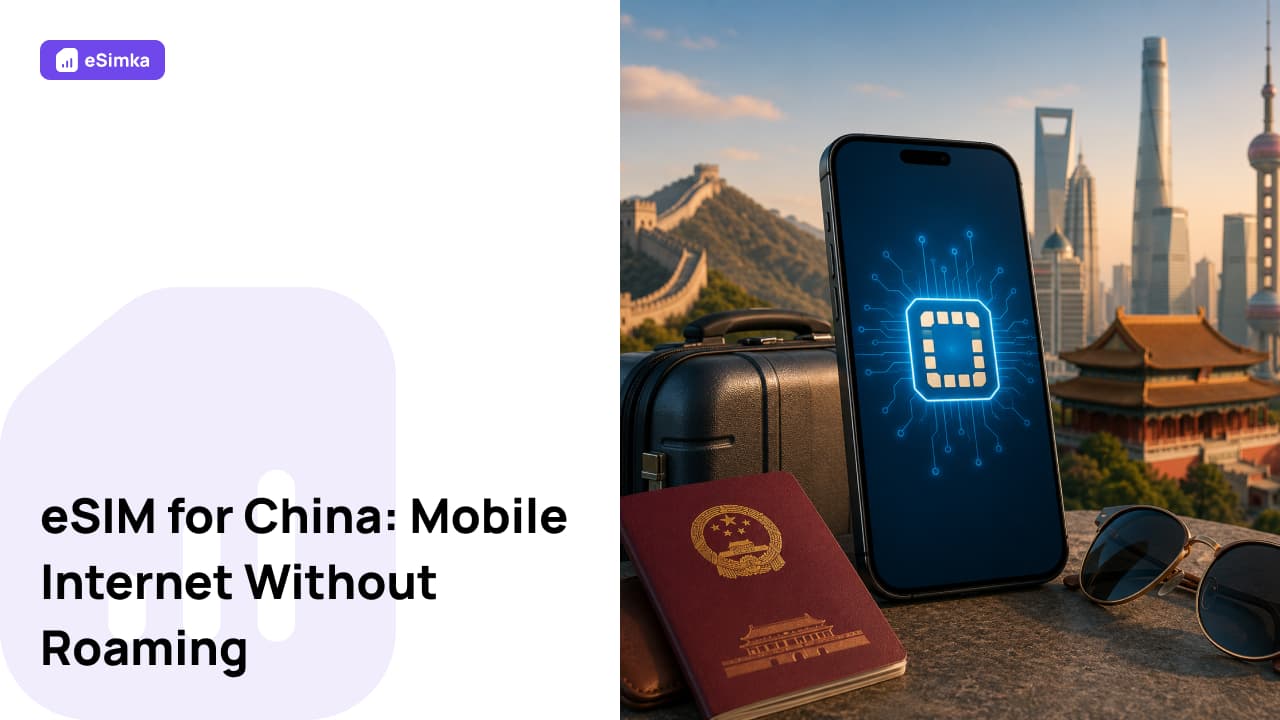
China is a popular destination for tourism, business trips, education, and international travel. You may need mobile internet immediately after arrival to open maps, book a taxi, contact your hotel, use a translator, check reservations, or pay for purchases through mobile apps.
To avoid searching for a local SIM card at the airport and paying expensive international roaming fees, you can set up an eSIM for China in advance. After purchasing a plan, you receive a QR code or manual installation details, add the profile to your smartphone, and select the eSIM for mobile data.
Why Do You Need an eSIM in China?
In China, many everyday tasks are handled through smartphones. Internet access is essential for navigation, transportation, communication, payments, and travel services.
An eSIM allows you to:
- set up mobile internet before departure;
- get online immediately after arrival;
- keep your primary SIM active for calls and text messages;
- avoid high roaming charges;
- choose a package based on the length of your trip;
- save time by not purchasing a local SIM card.
An eSIM is especially convenient for short visits, layovers, business trips, and journeys across several Chinese cities.
Where Does eSIM Work?
Travel eSIMs usually connect to partner mobile networks within China. Coverage depends on the selected provider, plan, and region.
Mobile internet is generally available in major cities and popular destinations, including:
- Beijing;
- Shanghai;
- Guangzhou;
- Shenzhen;
- Chengdu;
- Xi’an;
- Hangzhou;
- Chongqing;
- Sanya and other cities on Hainan Island;
- international airports and business districts.
Connections are usually more reliable in major cities. Speeds may be lower in mountainous areas, small villages, and remote regions.
Before purchasing a plan, check whether it covers mainland China only or also includes Hong Kong, Macau, and Taiwan. Some providers treat these destinations as separate coverage zones.
Which Services Will Work with an eSIM?
Access to some international websites, messaging apps, and online services may be restricted in mainland China.
Whether your usual services work through a travel eSIM depends on the provider and how its mobile traffic is routed. Some international eSIMs route traffic through networks outside mainland China, but this does not apply to every plan.
Before purchasing an eSIM, check whether:
- Google, Gmail, and Google Maps are available;
- WhatsApp, Telegram, and other messaging apps work;
- the social networks you need are accessible;
- a separate app is required to access certain services;
- the plan description mentions any restrictions.
Do not assume that every eSIM automatically provides access to all international apps. The exact conditions should be confirmed with the provider.
Which Data Package Should You Choose?
The amount of data you need depends on the length of your trip and how you plan to use your smartphone.
General recommendations:
- 1–3 GB — maps, messaging, translation apps, and checking reservations;
- 5–10 GB — daily navigation, taxi apps, messaging, music, and social media;
- 10–20 GB — video calls, remote work, file uploads, and video streaming;
- large or unlimited package — long stays and regular online work.
For a 7–10 day trip, 5–10 GB is usually enough for most travelers. For business travel involving video conferences or active remote work, consider a package with at least 10–20 GB.
Also check:
- the validity period;
- available connection speed;
- 4G or 5G support;
- hotspot and tethering availability;
- speed limits after using a certain amount of data;
- whether additional data can be purchased.
When Should You Install and Activate an eSIM?
It is recommended to install the eSIM profile before departure while your smartphone is connected to stable Wi-Fi.
This is especially important when traveling to China, as you may have difficulty accessing the provider’s email, app, or QR code page after arrival.
Before installation, check when the plan’s validity period begins. There are two common options:
- after the first connection to a supported network in China;
- immediately after the eSIM is installed.
Before your trip:
- Check whether your device supports eSIM.
- Save the QR code and instructions for offline access.
- Install the profile on your smartphone.
- Rename it, for example, “China.”
- Do not delete the eSIM after installation.
- Check whether data roaming must be enabled.
- Save the provider’s support contact details.
Regional versions of the same smartphone model may have different eSIM capabilities. Check not only the model name but also its exact model number and intended market.
How to Install an eSIM on iPhone
You will need a stable internet connection and the QR code provided by the eSIM provider.
Follow these steps:
- Open Settings.
- Go to Cellular or Mobile Data.
- Tap Add eSIM.
- Select Use QR Code.
- Scan the QR code.
- Confirm that you want to add the cellular plan.
- Give the profile a clear name.
- Open Cellular Data.
- Select the installed eSIM.
- Enable data roaming if required by the provider.
Your primary SIM can remain active for calls and text messages. To prevent charges from your home carrier, make sure the travel eSIM is selected for mobile data.
How to Install an eSIM on Android
Menu names may differ depending on the manufacturer and Android version.
The general installation process is as follows:
- Open your smartphone settings.
- Go to Connections, Network & Internet, or SIM Cards.
- Select Add eSIM.
- Scan the QR code.
- Confirm the profile download.
- Select the eSIM for mobile data.
- Enable data roaming if required by the instructions.
- Restart the phone if necessary.
On Samsung devices, these settings are usually found under SIM Manager. On Google Pixel phones, they are typically located under Network & Internet.
What to Do If the Internet Is Not Working
If the internet does not connect after arrival, check the main device settings.
Make sure that:
- the eSIM profile is enabled;
- mobile data is turned on;
- the eSIM is selected for mobile data;
- data roaming is enabled;
- Airplane Mode is turned off;
- the plan has already been activated;
- your data allowance has not been used up;
- the device is connected to a supported network.
Try turning on Airplane Mode for 20–30 seconds and then turning it off. If the connection still does not appear, restart your smartphone.
Some plans require manual APN configuration. Use only the settings provided in your eSIM installation instructions.
You can also disable automatic network selection and manually connect to one of the supported partner networks. The list of compatible carriers is usually included in the plan description or activation email.
If mobile internet works but certain apps do not open, the issue may be related to traffic routing or service restrictions rather than the eSIM settings.
Frequently Asked Questions
Can I install an eSIM before departure?
Yes. It is best to install your eSIM for China in advance while connected to stable Wi-Fi. Before adding the profile, check when the plan’s validity period begins.
Do I need a passport to buy an eSIM?
A passport is usually not required for most international travel eSIMs. However, identification requirements depend on the provider and type of plan.
Does eSIM work immediately after arrival?
Internet access usually becomes available after the smartphone connects to a partner network. You need to enable the eSIM, select it for mobile data, and turn on data roaming if required.
Will Google and my usual messaging apps work?
This depends on the specific eSIM and how its traffic is routed. Check the plan description or contact the provider’s support team before purchasing.
Can I share the internet through a hotspot?
Many plans support hotspot tethering, but some providers restrict data sharing or connection speed. Check the conditions before purchasing.
What should I do if I run out of data?
Open the provider’s app or account dashboard and check whether a top-up is available. If you cannot add more data, you will need to purchase another package.
Can I use an eSIM together with a physical SIM card?
Yes. Most modern smartphones allow you to use a physical SIM card and an eSIM simultaneously. Your primary number can remain active for calls and text messages, while the eSIM provides mobile internet.
Important compatibility note: Apple applies specific restrictions to eSIM support for local Chinese carriers depending on the iPhone model and region. Before traveling, check the exact model number of your device and install an international travel eSIM in advance.